



The Becoming series started in 2019. We wanted to hear from women in different walks of life and how they were approaching creativity, career goals, and more–mostly the WHY and HOW beneath it all. It’s been amazing to conduct these interviews and get a “behind the scenes” look at so many inspirational women! You can see them all here.
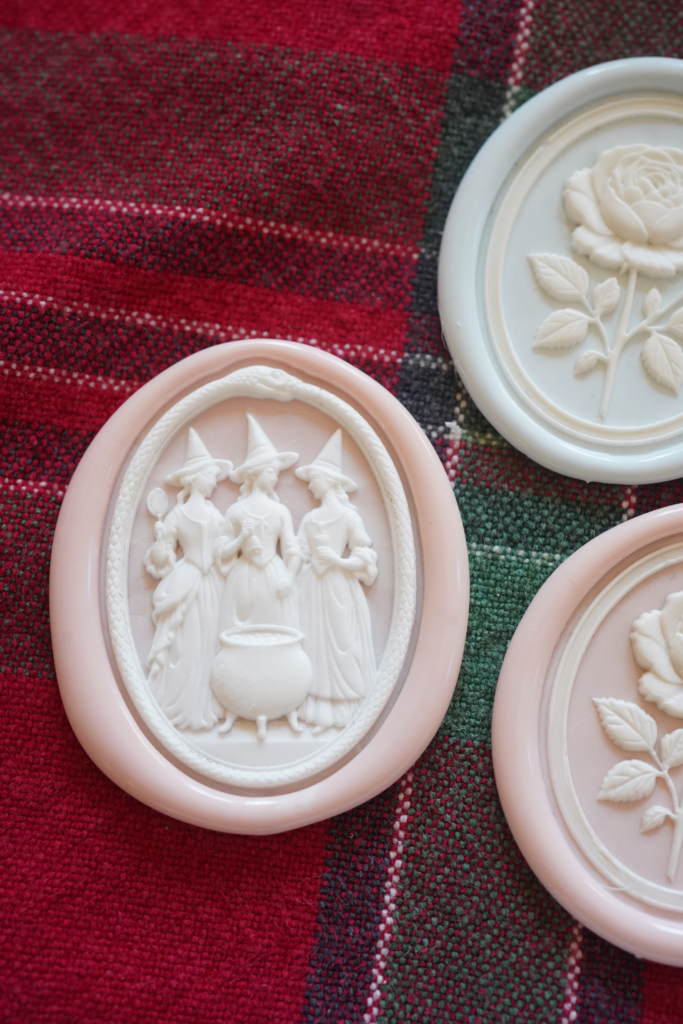
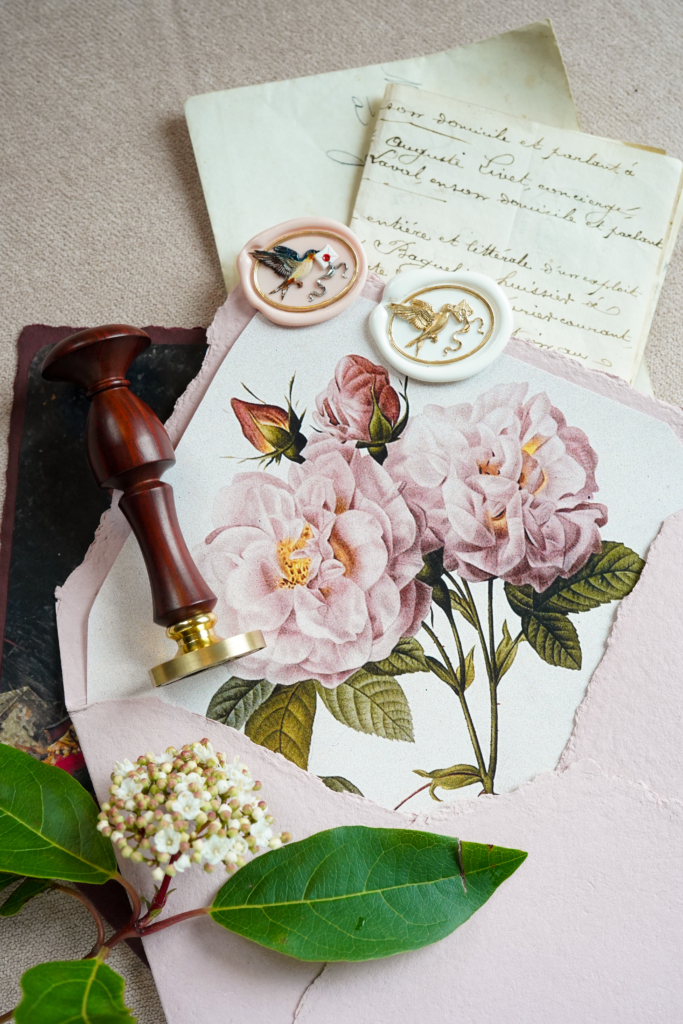
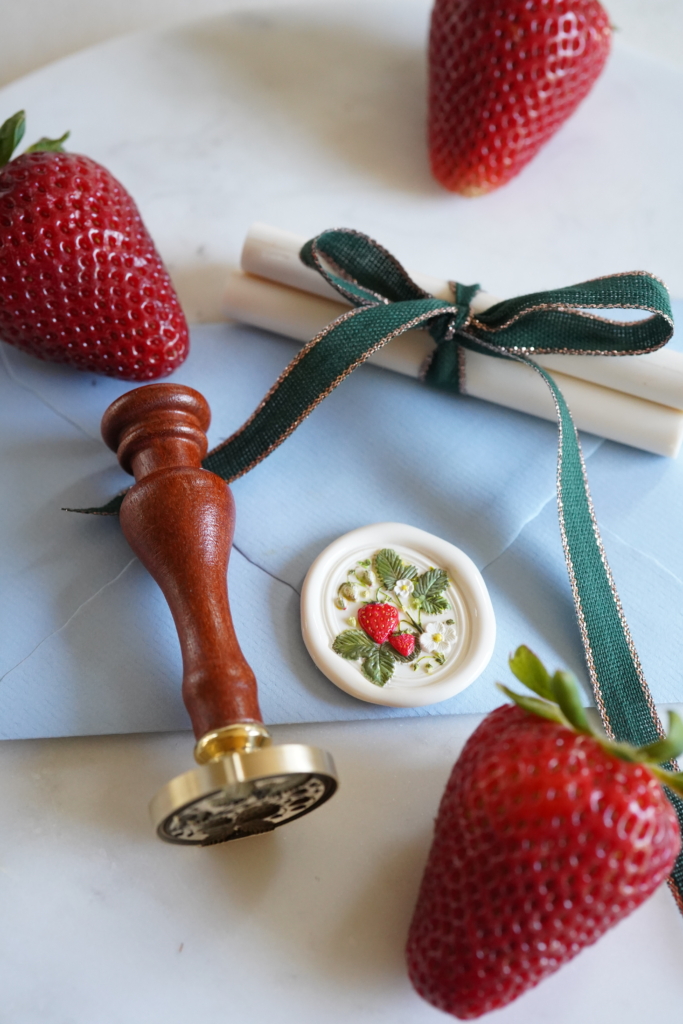
Today I’m thrilled to introduce you to Kathryn Hastings. You might recognize her from her viral videos showing gorgeous wax stamps. They mesmerize me! Kathryn is an artist, writer, and founder of Kathryn Hastings & Co., specializing in museum-quality wax seals designed to last for generations. Featured in The Art of Correspondence and magazines like Victoria, Veranda, and Grazia, her work bridges history and the modern day. Through her artwork, podcast, retreats, and courses, Hastings champions the enduring power of handwritten letters, inviting everyone to reclaim the art and magic of personal correspondence.
What do you consider yourself? Example: Artist, designer, illustrator, maker, business person, educator, etc.?
Artist and writer.
Where did you grow up? Were there aspects of your childhood that have influenced what you do now?
I grew up in Zephyr Cove, a small town on the Nevada side of South Lake Tahoe, and the place shaped both who I am, and how I approach my work.
First, it instilled in me a deep connection to nature. I have always felt very much a part of it. I developed a close relationship with animals, plants, trees, and especially the water, and Tahoe’s extraordinary light, color, and atmosphere deepened that connection. Growing up in a place where the landscape is constantly changing sharpened my sensitivity to beauty and deeply influenced my aesthetic, particularly my love of vibrancy and color.
Second, the culture of Tahoe taught me to embrace risk. It is a place where many people participate in sports that are both physically demanding and genuinely dangerous. I was a freestyle skier, and from a young age I learned to do things even when they scared me. I got hurt a lot. There wasn’t a single year of high school when I didn’t end up in the hospital because of a sports-related injury. Looking back, those experiences taught me something surprisingly valuable: as long as I didn’t die, I could always recover, get back up, and try again.
There is a vulnerability in putting your art into the world, especially when you’re trying to create something new or reimagine an existing category. It can be uncomfortable, but taking risks is already part of my DNA. I enjoy putting myself in situations that feel a little dangerous. I have to remind myself that the danger is not physical and I’m not going to end up in the hospital. The risk is creative. The fear is still there, but since I have held fear for so long in my body, it just seems like a necessary ingredient to a meaningful life.
What did you dream of becoming when you were younger?
Even as a child, I was always making art. One of my favorite memories is painting a portrait of my grandmother, Neenie, when I was in fourth grade. She was the one who taught me to write letters, a gift that continues to shape so much of my life and work.
For a long time, I imagined becoming a paleontologist. I loved the word “paleontologist” itself, but even more than that, I loved the idea of spending my days in remote and mysterious desert landscapes around the world, discovering secrets of ancient creatures. Looking back, that impulse has never really left me. While I didn’t end up excavating fossils, I do spend much of my life uncovering forgotten traditions, studying historical objects, and exploring the stories they carry through time.
What sparked your interest in the epistolary arts and sharing on the Internet?
I have always been a letter writer. My grandmother, Neenie, taught me to write letters when I was a child, and from an early age I was fascinated by the magic of the post, the idea that you could send something out into the world and, days later, someone would discover it in their mailbox.
As an artist, I’m also drawn to the way letters and wax seals move through the world. No matter how carefully I make something, there comes a moment when it has to leave my hands. It begins a life of its own. Unlike a painting that hangs on a wall, a letter travels. It moves through space, through time, and through other people’s lives. I find that incredibly meaningful.
I’m also fascinated by the way epistolary arts exist between permanence and impermanence. The traditions themselves are ancient, and objects like wax seal stamps often outlive the people who made and used them. They remind us of our own impermanence while connecting us to everyone who came before us and everyone who will come after us. History isn’t something that only happened in the past, we’re living it now. Through the objects we make and the traditions we continue, we’re shaping what future generations will inherit.
I decided to share this work online after building a large collection of antique wax seals. I realized these remarkable objects deserved to be seen. What I love most about them is that they are both deeply intimate and wonderfully shareable. A seal may sit in a collection for hundreds of years, but the moment it is pressed into wax, it creates something entirely new. That same image can continue traveling from one person to another across generations. In that sense, every impression carries a little piece of history forward.
Ultimately, I wanted to introduce more people to the epistolary arts because I believe they are living traditions. They aren’t relics of the past. They are practices that still have the power to connect us to one another in a way that feels deeply human.
Three words I’d use to describe my style are symbolic, heirloom, and transformative.
Symbolic, because every piece I create is layered with meaning. I draw from history, mythology, floriography, and personal ritual, so there is always something deeper to discover.
Heirloom, because I create objects meant to outlive us. I want my work to be treasured, passed from one generation to the next, accumulating stories and meaning over time.
Transformative, because my goal isn’t simply to make beautiful objects. I hope they change the way people experience everyday life. Whether through writing a letter or pressing a wax seal, I want my work to help people slow down, connect more deeply, and see beauty in ordinary moments.
What is your educational background and how has it shaped or changed your current career?
I studied art history at Colorado College, which has a very unusual academic model called the Block Plan. Rather than taking four or five classes at once, students take one course at a time, immersing themselves completely in a single subject for three and a half weeks before moving on to the next. It taught me how to focus with tremendous intensity, to go deep rather than broad. I still approach my work that way today, both as an artist and as an entrepreneur. When I’m working on a project, I become completely absorbed in it.
My senior thesis focused on the letters of Albrecht Dürer, which became my first deep academic exploration into the epistolary arts. I became fascinated not only by what Dürer wrote, but by the letters themselves as physical objects, their handwriting, their materiality, and their ability to collapse the centuries between us. That experience planted a seed that eventually grew into my life’s work.
Today, I see myself as participating in a living tradition that stretches across thousands of years. My education taught me that traditions survive because each generation chooses to carry them forward. That perspective influences everything I create. I’m always asking not only, “Is this beautiful?” but, “How might this object continue telling its story long after I’m gone?”
What inspired you to become an artist?
I have always been an artist, but it wasn’t until after I got married and my son was born that I decided to pursue it professionally.
My love for my husband is so harmonious and effortless that it made me question why the rest of my life, especially my work, didn’t feel that way. I realized I wanted a career that was as deeply aligned with who I was as my marriage was.
Until my son was born, my creative pursuits had existed in the margins of my life. They filled the cracks between other responsibilities, but they were never at the center. Becoming a mother changed that. Life suddenly felt more meaningful, and I could no longer keep my greatest passion at the periphery of my existence. I wanted my children to see what it looked like to devote yourself wholeheartedly to something you love.
Choosing to become an artist wasn’t so much a reinvention as it was a decision to stop treating art as something secondary. It was finally giving the deepest part of myself permission to lead.
What is one project that you are especially proud of and why?
One project I’m especially proud of is the Hastings Étui.
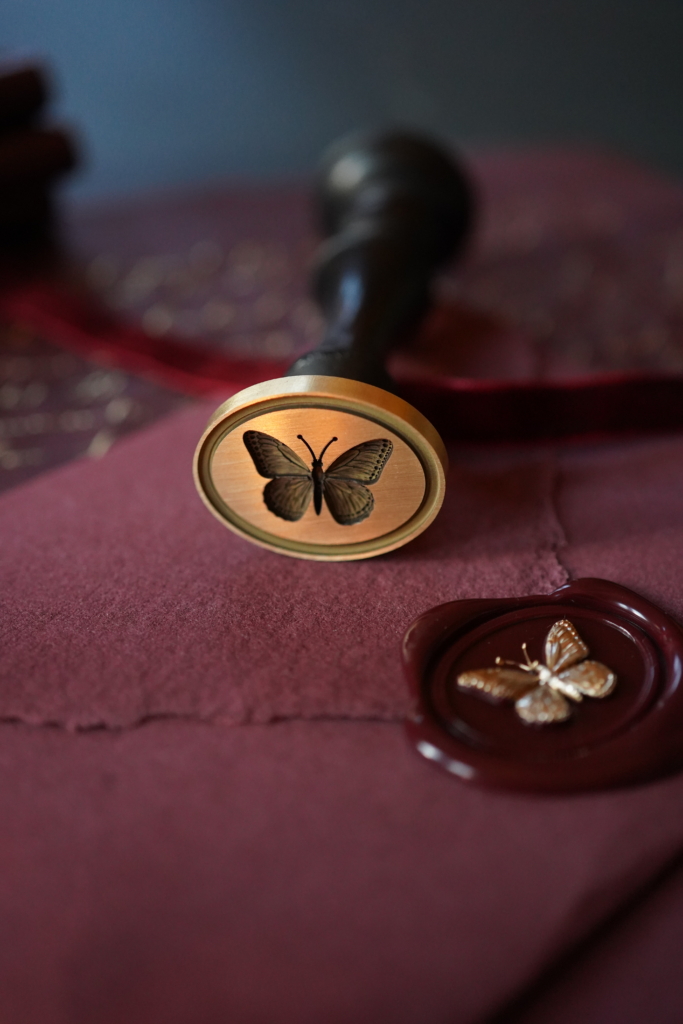
The Étui is a handcrafted wax seal handle designed to hold interchangeable engraved seal “pennies.” Instead of owning a single seal, collectors can build a personal collection of designs over time, allowing one handle to tell an ever-evolving story.
The inspiration came from a historic style of seal that had largely disappeared for centuries. Rather than simply reproducing it, I wanted to reimagine it for the present day. The Hastings Étui transforms the wax seal into something that can grow with its owner over a lifetime, creating an ongoing conversation not only between the person using it and the people receiving their letters, but also across generations.
I’m especially proud of the craftsmanship. Everything I create is designed to last for at least 300 years, and the Hastings Étui embodies that philosophy. It is exceptionally durable, made to be used, treasured, and eventually inherited.
I’m also proud that it is entirely designed and manufactured in the United States. Every detail, from its engineering to its finish, reflects my commitment to creating objects of lasting beauty and uncompromising quality.
To me, the Hastings Étui isn’t just a product. It’s a modern heirloom that revives an ancient tradition while inviting people to become part of its future.
Where do you find inspiration?
I find it everywhere. My life and my art are deeply intertwined, so I don’t see creativity as something outside of myself. Inspiration isn’t something I have to chase. It’s simply the way I experience the world.
I find endless inspiration in nature, in the changing seasons, and in the interior seasons of our emotional lives. I’m deeply inspired by history, especially old objects and handwritten letters that have carried stories across generations. I’m fascinated by cycles, whether they’re the long arc of generations, the rhythms of the natural world, or even the symbolism of the zodiac. They remind me that we are part of something much larger than ourselves, and that there is wisdom and beauty in paying attention to what continually returns.
How do you make social connections in the creative realm?
I am never very strategic about making connections. The right people just seem to come into my life at the right moment. While many of my closest friends are fellow artists, I’m really drawn to anyone who is deeply passionate about what they do. I could spend hours talking with a scientist, a poet, an archaeologist, or a master gardener. As long as someone sees the world differently than I do and is devoted to their craft, I find a creative resonance. Those kinds of conversations almost always leave me seeing the world in a new way.
What artists and creatives do you look up to, both historical and present?
The artists I admire span centuries, but each has shaped the way I think about art in a different way.
I have always loved Giovanni Bellini. His paintings are incredibly beautiful to me. I’m drawn to the tenderness of the Madonna and Child and his luminous Venetian light. He feels like finding an ancestor whenever I see his work in a museum. I also deeply admire the workshop he built and the life he dedicated to his practice.
Albrecht Dürer has been another lifelong influence. I admire his extraordinary draftsmanship, his meticulous nature, and the way he transcended artistic categories. Reading his letters, I was struck by how human he was. Even though we are separated by more than five centuries, many of his thoughts and struggles felt remarkably familiar.
Joseph Cornell is another artist I return to often. His boxes are like entire worlds contained within intimate spaces. My own work is also about inviting people into little worlds, or paracosms, where symbolism, memory, and imagination come together.
Marcel Duchamp gave me the permission slip to make my own rules. Whenever I encounter criticism or someone questions whether what I’m making is “art,” I think of Duchamp and remember that artists have always expanded the boundaries of what art can be.
The Color Field painters have also had a profound influence on me. Their work reminds me that color can communicate on a level deeper than language, something that has become central to my own practice and the emotional experiences I hope to create.
Hilma af Klint gave me confidence to trust visionary work. Much of my creative process begins with visions and intuitive knowing, and seeing the seriousness with which she approached those experiences made me feel less hesitant about speaking openly about my own.
Among contemporary artists, I admire Jeff Koons for the ambition of his practice. When I face criticism, especially as a woman building a large creative vision, I sometimes ask myself, “What would Jeff Koons do?” It reminds me to stay focused on the work rather than the opinions surrounding it.
I also deeply admire Alexandra Grant. Beyond the beauty of her work, I appreciate the way she speaks about art with such clarity and conviction. She has given me confidence that meaningful work doesn’t have to be immediately understood by everyone, and that it’s okay for an artist to trust the depth and specificity of their own vision.
What books, movies, shows, or music are making you excited these days?
Lately, I’ve been immersed in the engravings of Nicolas-Henri Tardieu. I love studying the symbolism woven throughout his work and reading the descriptions that accompany his engravings. It’s always fascinating to design something from intuition and then discover that he explored remarkably similar ideas centuries ago. It reminds me that certain symbols and archetypes seem to transcend time.
Musically, I return again and again to Gregorian chant and the compositions of Hildegard von Bingen. They help me enter a contemplative creative space.
What is a piece of advice that you have carried with you and who is it from?
During my senior year of college, I had the opportunity to visit Chuck Close in his studio. He wasn’t giving advice directly, but something he said stayed with me. He talked about intentionally placing parameters around his work because he knew he had the ability to imitate many different artists. Rather than doing everything, he chose to create within a set of self-imposed constraints.
I’ve carried that idea with me ever since. My own practice spans many different media, but I’ve chosen to see the wax seal as my primary canvas. At first glance, it seems like such a small format, almost too limited to hold much possibility. Yet I’ve found the opposite to be true. Within a single wax seal, an entire universe can exist. The constraints of the medium have become a source of creativity rather than a limitation, continually inviting me to discover how much beauty and meaning can live within such a small space.
On the flip side, is there a comment or critique that motivated you to do something differently?
The critique I hear most often is that my work is expensive. At first glance, it seems like people are questioning the price, but I don’t think that’s actually what they’re responding to. I think they’re reacting to the fact that I’ve taken a medium traditionally associated with craft and insisted on treating it as fine art.
That critique has actually strengthened my conviction. It has made me think deeply about who gets to live with extraordinary objects and why we so often feel the need to justify beauty. I’ve noticed that people are generally comfortable with women collecting small decorative things, but they’re sometimes less comfortable when those objects ask to be seen as significant works of art.
For me, beauty isn’t frivolous. Living with beautiful objects can change the way we experience our homes and our daily lives. Whether it’s my work or someone else’s, I believe everyone deserves to surround themselves with things that feel meaningful, and valuable. That criticism hasn’t made me lower my ambitions. If anything, it’s made me more committed to elevating the medium and continuing to invite people to see it differently.
What is your workspace like?
My studio feels a bit like stepping into an old library. It’s filled with books, antique objects, and the tools of countless creative experiments. There’s an antique portrait of a knight who seems to watch over the room. Some people joke that his eyes follow them wherever they go, but I’ve always experienced him as a guardian of the space.
I’m surrounded by heirlooms that carry stories of their own, including an antique desk that belonged to my grandmother. Alongside those are antique wax seals, natural specimens, and just about every art supply I could possibly need to bring an idea to life. If inspiration strikes, I want to have the materials to explore it immediately.
The space feels less like a workshop and more like a cabinet of curiosities, a place where history and craftsmanship are made and live together.
Describe some habits that keep you motivated and productive. How do you climb out of a creative slump?
I don’t really believe in creative slumps, or in constantly needing to be motivated or productive. I think creativity moves in seasons, just as nature does, and I’ve learned to work with those rhythms rather than against them.
As an artist, I hope to be making work for the rest of my life. Because of that, sustainability matters much more to me than productivity. I don’t force ideas or try to manufacture inspiration. Instead, I pay attention to what season I’m in. Some seasons are for making, others are for reading, observing, traveling, editing, or simply allowing new ideas to take root.
I’m creating in some form almost all the time when I’m not with my family, but it comes from genuine curiosity rather than external pressure. Because the motivation is internal, I rarely experience burnout. After an intense period of travel or a demanding phase of editing or making, I simply allow myself time to recover. The next idea is already there, but I give myself space to meet it.
I’ve found there’s no reason to judge the natural ebb and flow of life. Every season has its purpose, and they all belong to the same larger cycle.
What is a typical day like for you?
My days begin with my family. I wake up with my husband and children, and once everyone has left the house, I make a cup of tea and begin heating sealing wax. Even if I only have fifteen minutes, I always start my day by making something. More often than not, those first few minutes turn into four or five hours of focused creative work, though every day is a little different depending on what I’m creating.
Around 4 p.m., I step away from the studio for Pilates. By 5 p.m., I’m fully present with my family, and that time together is an important part of the rhythm of my day.
Once my children are asleep, I usually spend another hour or two working. The evenings tend to be quieter and are often reserved for writing, editing photographs, or preparing my newsletter and social media.
No two days look exactly alike. Some days I’m designing, some days I’m writing, some are spent traveling or researching. But the rhythm stays remarkably consistent: create in the morning, reconnect with my family in the evening, and return to quieter, reflective work at night. It feels less like following a schedule and more like following the natural cadence of my life.
What is one skill you wished you learned when you were younger?
I wish I had learned to grow a backbone much earlier. For a long time, I was so sensitive to other people’s opinions that I edited parts of myself to make everyone else comfortable. Looking back, I wish I’d learned to say, “Take it up with Duchamp,” and get back to work.
Rainer Maria Rilke wrote that critics are very good at taking things apart but don’t necessarily know how to build them. That idea has stayed with me. I’ve learned that not every opinion deserves my attention. Many people are quick to point out what they don’t like, but very few are willing to dedicate their lives to making something meaningful.
Learning to protect my time, trust my instincts, and stop apologizing for my vision has been one of the most valuable skills I’ve developed. My job isn’t to convince everyone. My job is to keep building.
Is there anything more you would like to “become?”
Yes. An old woman.
I turned forty this year, and by half my age I had already lost many friends. Because of that, I don’t take growing older for granted. It feels like a privilege. More than anything, I hope to live another forty or sixty years, continuing to create, learn, and make beautiful things.
I’ve seen a future where the arts become much more central to everyday life, especially within the home. I hope I’m here long enough to help build that future and to see it fully embodied.
I also have a very personal hope. I’ve met four generations of my family, and I would love to meet seven. To become an ancestor while still being able to look into the eyes of those who come after me would be one of the greatest gifts I could imagine.
Ultimately, I don’t aspire to become anything other than myself. I simply hope to become an older, wiser woman who never stops creating.
You can find Kathryn Hastings:
Instagram @kathrynhastingsco
You can also read more about them on their website